Wellness · September 30, 2026
You've probably had days where everything feels fine on the surface — your schedule is manageable, nothing dramatic is happening — and yet your shoulders are hiked up to your ears, your neck is tight, your jaw aches, and you can't quite take a full deep breath. Sound familiar? Most people chalk that up to "just the way things are." But what's actually happening in those moments is something much more specific, and understanding it can genuinely change how you take care of yourself. Stress doesn't always announce itself with racing thoughts or a pounding heart. Sometimes, it shows up silently — in your muscles, your posture, your spine — long before your mind even registers that something is off. Here at Towson Integrative Health in Towson, MD, we see this pattern in patients every single week, and it's one of the most important conversations we have.
What does it mean when stress "shows up in the body"?
Physical stress manifestations are the real, measurable ways your nervous system and musculoskeletal system respond to stress — even when you feel emotionally calm. These changes include chronic muscle tension, postural shifts, joint restriction, altered breathing patterns, and nervous system dysregulation that can quietly build into pain and dysfunction over time.
Your Body on Stress: What's Actually Happening
When your brain perceives a threat — whether it's a looming deadline, a difficult conversation, or even a chronic low-level anxiety you've gotten so used to that you barely notice it — it triggers what's commonly known as the fight-or-flight response. Your sympathetic nervous system activates, flooding your body with stress hormones like cortisol and adrenaline. Your heart rate increases, your breathing becomes shallower, and your muscles contract and brace for action.
This is a brilliantly designed survival mechanism. The problem is that the human body wasn't built to sustain that state day after day, year after year. Modern stressors — work pressure, financial worry, relationship strain, even the relentless pace of information overload — keep that system partially activated almost continuously. And unlike a predator you can run from, these stressors don't go away after 30 seconds. So the physiological changes that were meant to be temporary become your baseline.
Over time, chronically elevated cortisol and sustained muscle bracing change the way your body holds itself. Muscles that were designed to contract briefly and then release get stuck in a half-contracted state. Joints that depend on balanced surrounding musculature to move freely begin to feel restricted. The nervous system, which was designed to oscillate between high alert and calm recovery, gets locked into a pattern that makes true rest increasingly difficult. This is the hidden architecture of long-term stress — and for many people in Towson and the surrounding Baltimore area, it's the quiet culprit behind pain they've been chasing for months.
Silent Signs Your Body Is Carrying Stress
One of the most important things Dr. Paul M. Abosh, DC, CCSP, CCEP, CKTP emphasizes with patients at Towson Integrative Health is this: the body rarely lies, even when the mind is minimizing. There are physical patterns that almost universally emerge when someone has been carrying unaddressed stress for an extended period — and most people are surprised to learn how many of these apply to them.
Tension headaches are one of the most common. They typically originate from the suboccipital muscles at the base of the skull or from the upper trapezius — both of which are primary "stress muscles" that people habitually brace when under pressure. Many patients describe a slow build across the top of the head or behind the eyes, which worsens as the day goes on.
Jaw clenching and grinding, clinically referred to as bruxism, is another telltale pattern. Many people clench without realizing it — while driving, during focused work, or even during sleep. Over time, this creates dysfunction in the temporomandibular joint and contributes to chronic facial pain, ear discomfort, and neck tension.
Shallow breathing is perhaps the subtlest sign. When you're stressed, your breathing tends to shift from the diaphragm into the upper chest. This recruits the scalene and sternocleidomastoid muscles in the neck to assist with every breath — muscles that were never designed for that role full-time. The result is chronic neck tension and fatigue that no amount of stretching seems to fully resolve.
Digestive disturbances, disrupted sleep, an inexplicable sensitivity to light or sound, and that persistent sense of physical "tightness" that won't release — these are all ways the body flags a nervous system that has been running hot for too long. If any of these sound familiar, you're not imagining it, and you're certainly not alone.
The Stress-Spine Connection
The relationship between psychological stress and spinal health is genuinely fascinating — and far more direct than most people realize. Your spine is home to the spinal cord, the primary highway of your central nervous system. The surrounding muscles, ligaments, and joints don't just protect that cord structurally — they're also deeply intertwined with the nervous system's regulatory function.
When your body is under chronic stress, postural changes are almost inevitable. The upper back rounds forward, the head migrates in front of the shoulders, the thoracic spine loses its natural mobility, and the cervical spine — your neck — takes on disproportionate mechanical load. This isn't weakness or laziness. It's a predictable biomechanical cascade that results from sustained muscle activation patterns driven by nervous system stress.
What makes this particularly important is that these postural and spinal changes can then feed back into the nervous system in a way that perpetuates the stress response. Restricted spinal movement and muscle tension aren't just symptoms of stress — they can become ongoing inputs that keep your body in that guarded, activated state. It's a cycle that is very real, very common, and one that responds remarkably well to the kind of integrative, root-cause-focused care that the team at Towson Integrative Health is built around.
Research in the field of psychophysiology has increasingly supported the bidirectional relationship between physical tension and nervous system tone. Evidence suggests that manual interventions targeting musculoskeletal dysfunction can have a meaningful influence on the autonomic nervous system — helping shift the body toward a more parasympathetic (rest-and-recover) state. That's not a small thing. That's the foundation of genuine recovery.
How Chiropractic Care Fits Into a Stress-Informed Recovery Plan
When patients come into Towson Integrative Health carrying the physical weight of stress — whether they recognize it as stress or not — Dr. Paul M. Abosh, DC, CCSP, CCEP, CKTP begins with a thorough evaluation of what's actually happening in their body. Not just where it hurts, but how they're moving, how their spine is functioning, what their posture reflects about their daily habits and nervous system state, and what combination of contributing factors is most likely driving their presentation.
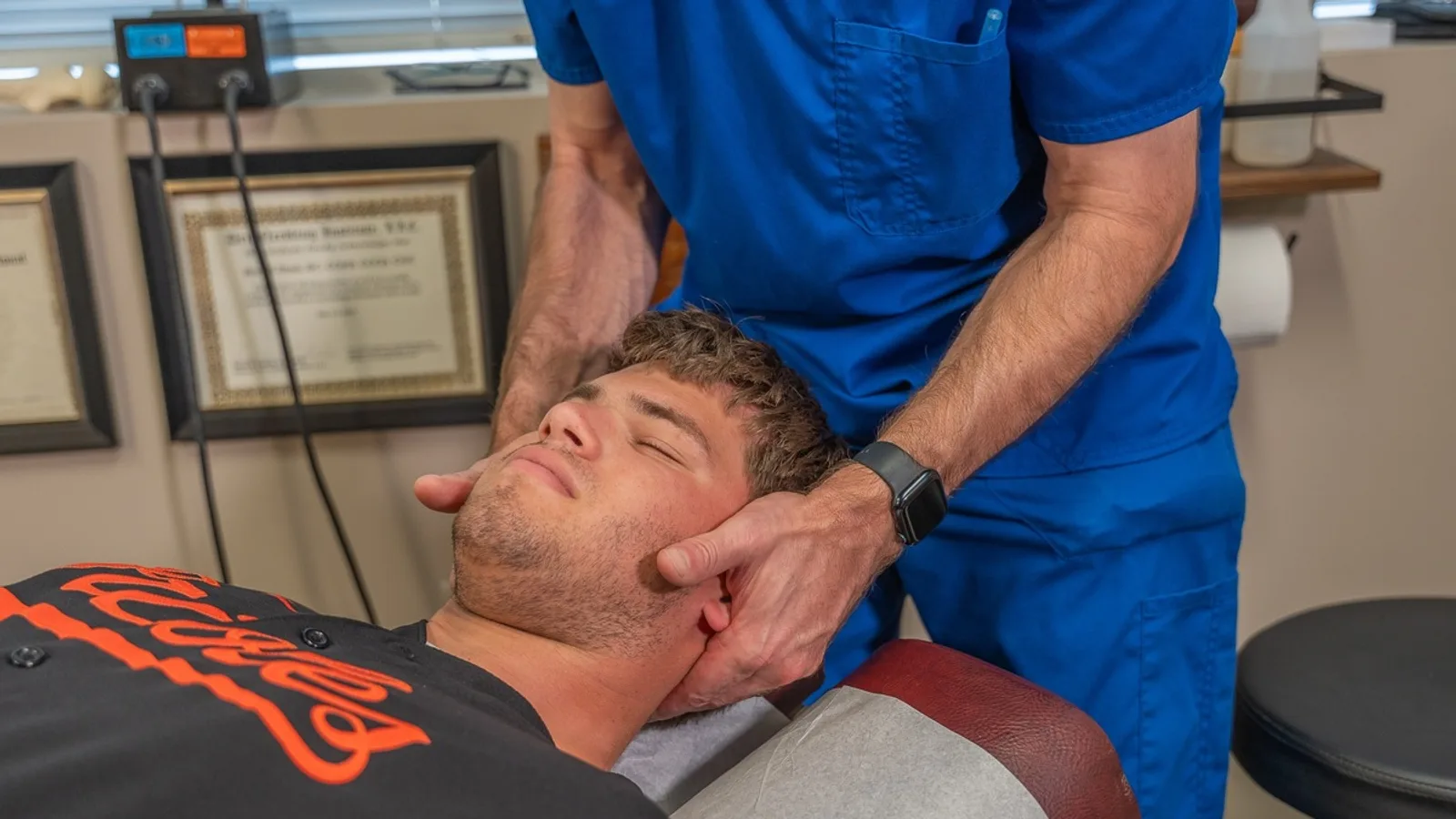
Chiropractic adjustments are a cornerstone of that care. By addressing areas of joint restriction in the spine and extremities, adjustments help restore more normal movement, reduce the mechanical stress on surrounding tissues, and provide input to the nervous system that research suggests can help down-regulate an overactive sympathetic response. Many patients report feeling noticeably more relaxed immediately following an adjustment — not just physically, but mentally — and that's not coincidental.
What makes care at Towson Integrative Health genuinely different is the integration. Chiropractic care doesn't exist in isolation here. When appropriate, it's combined with physical therapy to address movement patterns and muscular imbalances, trigger point dry needling to release deeply held tension in the specific muscles that stress chronically recruits, and lifestyle guidance that addresses the behavioral and ergonomic factors perpetuating the cycle. It's a coordinated system built around you — your body, your history, your goals.
This matters because stress-related physical dysfunction rarely has a single solution. The muscle that's tight has a reason for being tight. The spinal segment that's restricted has a reason it isn't moving. Finding and addressing those reasons — rather than simply chasing symptoms — is what produces lasting outcomes rather than temporary relief.
Practical Things You Can Do Between Visits
There's meaningful work you can do on your own to support your body's recovery from the physical effects of stress. These aren't gimmicks — they're grounded, practical strategies that align with how your nervous system and musculoskeletal system actually work.
Diaphragmatic breathing is one of the most powerful and underutilized tools available to you. Slow, deep breaths that expand your belly rather than your chest activate the vagus nerve and help shift your nervous system toward a parasympathetic state. Even five minutes of intentional breathing can meaningfully reduce muscle tension and lower your physiological stress response. The team at Towson Integrative Health often teaches patients specific breathing techniques as part of their overall care plan.
Paying attention to your posture — particularly during the activities where you spend the most time — matters more than most people realize. If you work at a desk, how your monitor is positioned, how your chair supports (or doesn't support) your lower back, and whether you're taking regular movement breaks all have a real cumulative effect on how much physical tension your body accumulates through the day. Small, sustainable adjustments to your workstation setup can meaningfully reduce the load on your cervical spine and upper back.
Gentle, consistent movement is profoundly helpful. Not necessarily intense exercise — though that has its place — but the kind of regular, low-threshold movement that keeps your joints mobile, your muscles from shortening, and your nervous system reminded that your body is capable and safe. Daily walks, mindful movement routines, and even periodic stretching breaks throughout the workday all contribute to a body that is more resilient to the physical effects of stress.
Finally, sleep quality matters enormously here. The body does the bulk of its physical restoration during sleep, and chronic stress both disrupts sleep and is worsened by poor sleep. Prioritizing a consistent sleep schedule, limiting screen exposure in the hour before bed, and creating an environment that supports genuine rest are not luxuries — they're part of recovery.
When to See a Chiropractor About Stress-Related Symptoms
If you've been experiencing persistent muscle tension, recurring headaches, neck or upper back stiffness, jaw tightness, or general physical fatigue that doesn't resolve with rest, it's worth having a professional evaluation. These symptoms are common, but common doesn't mean you simply have to live with them. They're signals worth paying attention to.
You don't need to be in severe pain to benefit from chiropractic care. In fact, addressing these patterns earlier — before they compound into more significant dysfunction — tends to produce better, faster outcomes. Many patients at Towson Integrative Health in Towson, MD come in for what they describe as "general tension" and discover that they've been carrying postural and spinal changes for far longer than they realized.
There are some symptoms that warrant prompt medical attention rather than, or in addition to, chiropractic care. Chest pain, severe shortness of breath, sudden onset severe headache, neurological symptoms like numbness or weakness, or signs of significant mental health crisis should be addressed by your primary care physician immediately. At Towson Integrative Health, we take a collaborative, whole-person approach — and when a situation calls for a referral or co-management, that's exactly what we recommend.
Stress Symptoms vs. What's Actually Going On Underneath
What You Notice | What's Happening Physiologically | How It's Commonly Addressed at Towson Integrative Health |
|---|---|---|
Tight shoulders and neck | Sustained activation of upper trapezius and levator scapulae from sympathetic nervous system arousal | Chiropractic adjustments, trigger point dry needling, postural retraining |
Tension headaches | Suboccipital muscle compression and cervical joint restriction referring pain into the skull | Cervical spine mobilization, soft tissue therapy, breathing retraining |
Jaw pain or clenching | Chronic masseter and pterygoid muscle bracing driven by unresolved sympathetic tone | Cervical and TMJ-adjacent manual therapy, lifestyle stress awareness coaching |
Upper back stiffness and rounding | Thoracic kyphosis driven by postural compensation and protective guarding | Thoracic spine mobilization, physical therapy exercises, ergonomic guidance |
Shallow breathing and fatigue | Accessory respiratory muscle overuse due to diaphragm disengagement | Diaphragmatic breathing retraining, rib and thoracic mobility work |
Poor sleep / feeling unrested | Elevated cortisol and dysregulated autonomic nervous system preventing restorative sleep stages | Integrative care to reduce nervous system load, sleep hygiene education |
Myths vs. Facts About Stress and the Body
Myth: If I'm not feeling emotionally overwhelmed, I'm not stressed.
Fact: Stress is a physiological state, not just an emotional one. Your nervous system can be running in a low-grade sympathetic activation pattern even when you feel mentally calm. Many patients are surprised to discover that their body tells a very different story than their mind. Physical symptoms like muscle tension and postural change can persist long after the emotional trigger has passed.
Myth: Muscle tension from stress is just something you have to push through.
Fact: Chronic muscle tension from stress is not a character flaw or something to simply endure — it's a biomechanical and neurological pattern that responds very well to targeted care. Approaches like chiropractic adjustment, dry needling, and therapeutic movement are well-suited to breaking these patterns when used as part of a coordinated plan.
Myth: Chiropractic care is only for people with back injuries.
Fact: Chiropractic care addresses the entire musculoskeletal and nervous system. Stress-related presentations — from tension headaches to thoracic stiffness to jaw-related neck pain — are well within the scope of what chiropractic care can meaningfully support. At Towson Integrative Health, Dr. Paul M. Abosh, DC, CCSP, CCEP, CKTP regularly works with patients whose primary driver isn't an injury at all, but rather accumulated physical stress.
Myth: These physical symptoms will go away on their own once things slow down.
Fact: Some will improve when life circumstances change. But many won't — because the physical patterns have become habitual and self-reinforcing. Waiting for life to "slow down" often means waiting indefinitely, while the dysfunction quietly worsens. Addressing it proactively tends to produce far better outcomes than waiting until pain becomes severe.
Myth: There's nothing a chiropractor can do to help with stress-related symptoms — that's a mental health issue.
Fact: The mind and body are not separate systems. While mental health support absolutely has its place — and is something we encourage alongside physical care when appropriate — the physical manifestations of stress are legitimate musculoskeletal and neurological conditions that respond to physical treatment. Evidence indicates that addressing the physical component of stress can have a meaningful positive effect on overall wellbeing.
Final Thoughts from Towson Integrative Health
Here in Towson, we see the real-world weight of modern stress every day — in the way people walk through our door carrying their shoulders, in the headaches that have become so routine patients no longer think to mention them, in the jaw tension that's been present so long it just feels normal. What we want you to know is that none of that is inevitable, and none of it means something is permanently wrong with you.
Your body is doing exactly what it was designed to do — responding and adapting to the demands placed on it. The question is whether those adaptations are being addressed, or whether they're being allowed to compound quietly over time. At Towson Integrative Health, we believe in catching and correcting those patterns before they become bigger problems. That's what integrated, root-cause care is all about.
Dr. Paul M. Abosh, DC, CCSP, CCEP, CKTP and the team at Towson Integrative Health are here to do exactly that — to partner with you, explain what's happening in your body, build a plan that addresses the actual cause, and walk with you toward a physical life that feels capable and free again. Whether you're in Towson, Timonium, Parkville, or anywhere in the greater Baltimore area, we're here when you're ready. Book your appointment and let's figure out what your body has been trying to tell you.
Frequently Asked Questions
Can stress actually cause physical pain, or is it all in my head?
Stress absolutely causes measurable physical changes — it's not imagined or exaggerated. Sustained sympathetic nervous system activation leads to real muscle tension, postural shifts, and joint restriction that can produce genuine pain. The experience is physical, even when the origin is partly psychological.
How long does it take for stress-related muscle tension to become a structural problem?
This varies considerably by person, lifestyle, and the specific tissues involved. However, postural and muscular compensation patterns can begin developing within weeks of sustained stress exposure. The longer they go unaddressed, the more ingrained they tend to become — which is one reason early evaluation is worthwhile.
Can chiropractic adjustments help with tension headaches?
Evidence suggests that chiropractic care targeting the cervical spine can be helpful for tension-type headaches, particularly those with a musculoskeletal component. The American Chiropractic Association and a growing body of clinical research support cervical manipulation as a reasonable conservative care option for this type of headache.
What's the difference between a stress-related muscle knot and a regular sore muscle?
A sore muscle from exercise typically resolves within a few days as the tissue recovers. Stress-related "knots" — often called myofascial trigger points — tend to persist because the nervous system keeps the affected muscle in a partially contracted state. They may be tender to pressure and can refer discomfort to other areas of the body.
Does Towson Integrative Health offer treatment specifically for stress-related physical symptoms?
Yes — while we don't treat stress as a psychological condition, we regularly address the physical manifestations of chronic stress including muscle tension, postural dysfunction, restricted spinal movement, and related pain patterns. Dr. Paul M. Abosh, DC, CCSP, CCEP, CKTP builds individualized care plans that account for the full picture of what's contributing to each patient's presentation.
Do I need a referral to see a chiropractor for stress-related symptoms?
In most cases, you do not need a physician referral to schedule a chiropractic evaluation. If you're experiencing physical symptoms that you suspect may be stress-related, you can contact Towson Integrative Health directly and our team will guide you through the next steps.
TL;DR
Stress creates real, measurable physical changes — including chronic muscle tension, postural shifts, restricted spinal movement, and nervous system dysregulation — even when you don't feel emotionally overwhelmed.
Common physical signs of unaddressed stress include tension headaches, tight shoulders and neck, jaw clenching, shallow breathing, upper back rounding, and disrupted sleep.
The relationship between stress and spinal health is bidirectional — physical tension can perpetuate the nervous system stress response, creating a cycle that benefits from professional care.
Chiropractic care, combined with physical therapy and trigger point dry needling at Towson Integrative Health, can help address the root physical causes of stress-related dysfunction — not just mask the symptoms.
Practical tools like diaphragmatic breathing, consistent movement, improved sleep habits, and ergonomic adjustments can meaningfully support your recovery between visits.