
Wellness · September 15, 2026
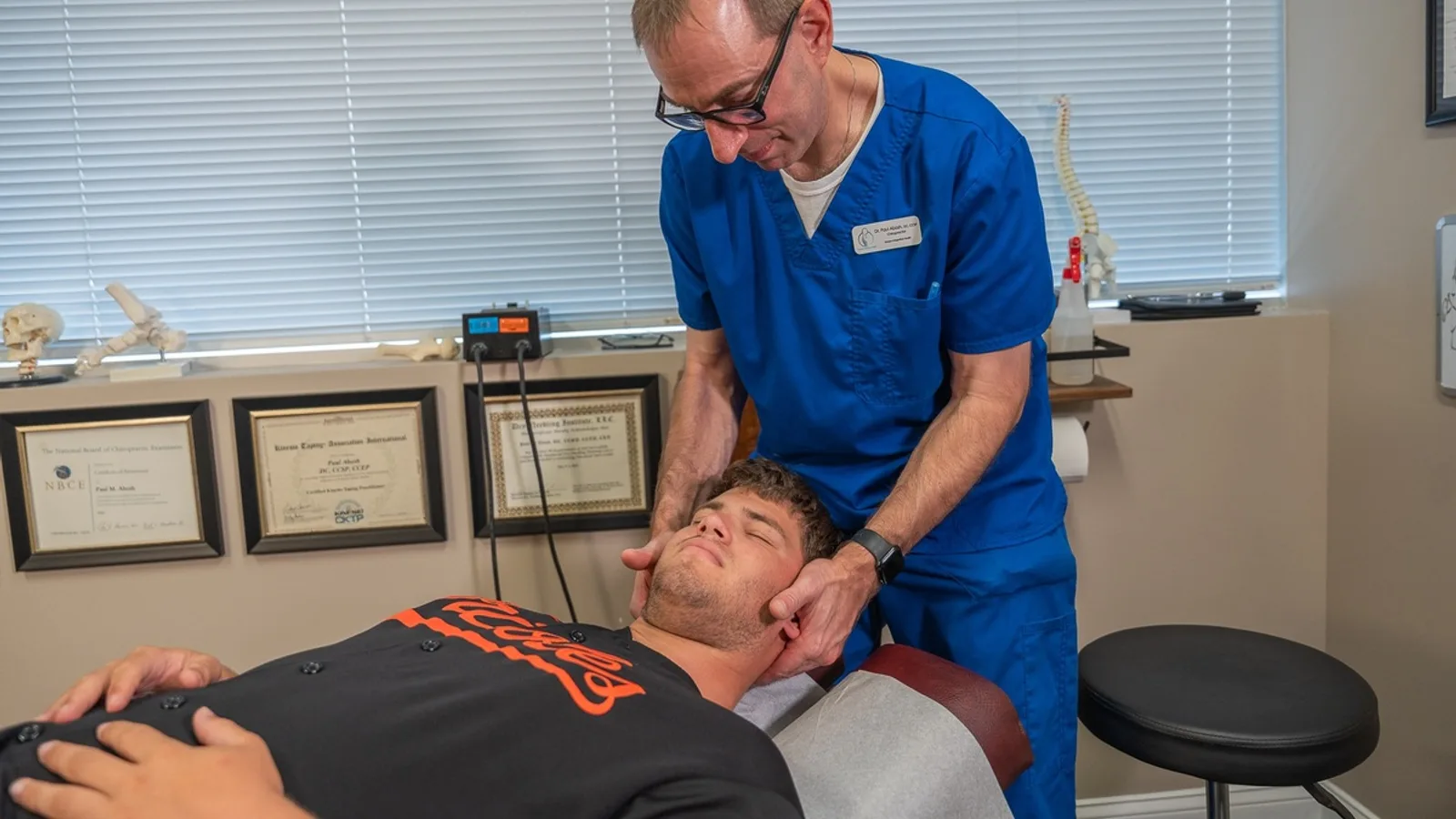
If you've ever been hit by a migraine, you know how completely it can derail your day — or your entire week. The throbbing pain, the sensitivity to light and sound, the nausea — it's not "just a headache." And here in Towson, we see patients every week who have been dealing with migraines for years, sometimes decades, without ever finding lasting relief. What many of those patients don't realize when they first walk through our doors is that their migraines and their neck pain aren't two separate problems. They're often deeply connected — and that connection is exactly where chiropractic care can make a meaningful difference.
What is the connection between migraines and neck pain? Migraines are a neurological and vascular condition characterized by intense, often one-sided head pain that can last anywhere from a few hours to several days. Research suggests that muscular tension, spinal misalignment in the cervical (neck) region, and nerve irritation in the upper neck are commonly associated with migraine onset and severity. Addressing these musculoskeletal contributors is a core focus of chiropractic care at Towson Integrative Health.
Understanding Migraines: More Than Just Head Pain
Migraines affect a significant portion of the population and are one of the leading causes of disability worldwide, according to the World Health Organization. Yet despite how common they are, migraines remain widely misunderstood — even by those who experience them regularly. Many people dismiss their symptoms as stress headaches or sinus pressure, which means they often go unaddressed for far too long.
A migraine is a neurological and vascular event. It typically involves changes in brain chemistry, blood flow, and nerve signaling that produce a cascade of symptoms beyond just head pain. These can include visual disturbances (called an "aura"), nausea, vomiting, extreme sensitivity to light, sound, and smell, and a profound inability to function normally. Some people experience prodrome symptoms — subtle warning signs like mood changes, food cravings, or neck stiffness — in the hours or even days before a migraine fully develops.
That last symptom is worth highlighting: neck stiffness before a migraine. It's more common than most people realize, and it's one of the most telling clues that the cervical spine is involved in the migraine pattern. At Towson Integrative Health in Towson, MD, this is something Dr. Paul M. Abosh, DC, CCSP, CCEP, CKTP looks for carefully during every evaluation — because it shapes the entire approach to care.
The Neck-Migraine Connection Explained
The relationship between the neck and the head is remarkably intimate from a neurological and anatomical standpoint. The upper cervical spine — meaning the top two or three vertebrae in your neck — is home to a complex network of nerves, muscles, and blood vessels that have direct influence on the head and brain. When there is dysfunction, misalignment, or muscular tension in this region, it can trigger or amplify migraine activity.
One of the most important structures in this conversation is the trigeminal nerve, which is the primary sensory nerve of the face and head. Research has shown that the trigeminal nerve has connections with the upper cervical spinal cord through a pathway known as the trigemino-cervical nucleus. This means that irritation or inflammation in the neck can actually "spill over" into the trigeminal pain system — producing head pain that feels exactly like a migraine. This is part of why so many migraine sufferers also experience neck pain, and why addressing the neck can sometimes reduce migraine frequency and severity.
There is also the role of the suboccipital muscles — the small, deep muscles at the base of the skull — which are known to refer pain into the head when they're tight or in spasm. Prolonged forward head posture, which is increasingly common in our screen-heavy world, places enormous strain on these muscles. Here in the greater Baltimore area, we work with patients whose daily routines — long commutes, desk jobs, extended phone use — are constantly loading the cervical spine in ways that contribute to both neck pain and migraines.
Common Causes of Cervicogenic Headaches and Migraines
It's worth briefly distinguishing between a true migraine and a cervicogenic headache — because, while they often overlap, they're not identical. A cervicogenic headache originates in the cervical spine and refers pain into the head. A migraine is neurological in origin but can be triggered or worsened by cervical dysfunction. In clinical practice, the two often coexist, and many patients have elements of both.
Common contributors that Dr. Paul M. Abosh, DC, CCSP, CCEP, CKTP evaluates at Towson Integrative Health include poor posture and forward head carriage, joint restriction or misalignment in the upper cervical vertebrae, muscle tension and trigger points in the neck, shoulders, and base of the skull, stress-related muscle guarding, prior neck injuries such as whiplash, and disc-related issues in the cervical spine. Any one of these factors — or a combination of them — can create the environment in which migraines become more frequent, more intense, or harder to recover from.
Sleep position is another frequently overlooked contributor. Sleeping on your stomach, or using a pillow that places your neck in a rotated or compressed position for hours at a time, can significantly stress the upper cervical joints. Patients who wake up with a headache already developing are often experiencing the consequences of a night spent in poor cervical alignment.
How Chiropractic Care Fits Into Migraine Relief
Chiropractic care takes a non-invasive, natural approach to addressing the musculoskeletal contributors to migraines. Rather than masking symptoms, the goal is to identify and correct the underlying dysfunction that is contributing to pain. At Towson Integrative Health, this philosophy is built into every patient interaction — because we genuinely believe that lasting relief requires getting to the root cause, not just treating what's on the surface.
Spinal manipulation — particularly focused on the upper cervical region — has been studied as a potential approach for reducing migraine frequency and severity. The American Chiropractic Association and several peer-reviewed publications have noted that chiropractic spinal manipulation may be a valuable option for patients with migraine and cervicogenic headaches. Evidence published through sources like the Cochrane Library indicates that spinal manipulative therapy may reduce migraine frequency in some patients, particularly when cervical dysfunction is present.
What does care actually look like here in Towson? Dr. Paul M. Abosh, DC, CCSP, CCEP, CKTP begins with a thorough evaluation — reviewing your health history, the pattern of your migraines, your posture, your movement, and the function of your cervical spine specifically. From that foundation, a personalized care plan is developed. This isn't a cookie-cutter approach. Because Towson Integrative Health integrates chiropractic care with physical therapy, trigger point dry needling, and lifestyle guidance, your plan can address multiple layers of the problem simultaneously.
Trigger point dry needling, for example, can be highly effective at releasing tension in the suboccipital muscles and the upper trapezius — areas that are frequently implicated in both neck pain and migraine onset. Physical therapy can address postural imbalances and movement patterns that continuously load the cervical spine. Together, these approaches create a more complete picture of care than any single treatment modality could provide on its own.
Practical Tips for Managing Migraines and Neck Tension
While professional care is essential for addressing the underlying causes, there are meaningful steps you can take on your own to support your recovery and reduce the frequency of migraine episodes. These recommendations are general and safe for most people, but always check with your care provider before making significant changes to your routine.
First, take your posture seriously. If you work at a desk or spend long hours looking at a screen, your monitor should be at eye level and your head should sit directly over your shoulders — not jutting forward. Even a modest improvement in head position can dramatically reduce the load on your upper cervical muscles over the course of a workday. Second, stay well hydrated. Dehydration is a well-recognized migraine trigger, and it also contributes to muscular tension and reduced spinal disc health. Aim for consistent water intake throughout the day rather than catching up all at once. Third, prioritize sleep quality and sleep position. Try sleeping on your back or side with a pillow that keeps your cervical spine in a neutral alignment, and avoid stomach sleeping if at all possible.
Gentle movement is also important. Prolonged stillness — whether sitting at a desk or lying in bed during a migraine — can worsen cervical stiffness. Light movement, gentle range-of-motion exercises, and regular breaks from static positions help keep the cervical joints mobile and reduce muscle guarding. Our team at Towson Integrative Health will give you specific movement guidance tailored to your situation, but the general principle of "move more, sit less" applies universally.
When to See a Chiropractor for Migraines
If you experience frequent migraines — generally defined as four or more per month — or if your migraines are becoming more severe or harder to manage, it's worth seeking a professional evaluation. Chiropractic care may be particularly appropriate if your migraines are consistently accompanied by neck pain or stiffness, if you notice that your headaches worsen after prolonged sitting or screen time, or if you've had a history of neck injury such as whiplash.
It's also worth considering chiropractic care if you've been relying heavily on over-the-counter or prescription medications to manage your migraines and you're looking for a complementary, non-pharmaceutical approach. Many patients in the Towson and Baltimore area come to Towson Integrative Health specifically because they want to reduce their medication dependence and address the root cause of their pain — and that's exactly the kind of partnership we're built for.
That said, there are red flags that should prompt an immediate medical evaluation rather than a chiropractic visit. These include a sudden, severe "thunderclap" headache that comes on instantly, headaches accompanied by fever, stiff neck, confusion, or neurological symptoms like weakness or vision loss, headaches following a head injury, or headaches that are progressively worsening over a short period of time. These symptoms require urgent medical attention and may indicate a serious underlying condition. Chiropractors are trained to screen for these red flags and will refer appropriately when needed.
Factor | Migraine | Cervicogenic Headache | Tension Headache |
|---|---|---|---|
Primary Origin | Neurological (brain/nerve signaling) | Cervical spine / neck structures | Muscular tension, stress |
Pain Location | Often one-sided; may radiate | Back of head, one side; radiates from neck | Band-like pressure around head |
Associated Symptoms | Nausea, light/sound sensitivity, aura | Neck stiffness, restricted movement | Tightness, fatigue, mild sensitivity |
Common Triggers | Hormones, stress, diet, light, sleep changes | Sustained postures, neck injury, joint restriction | Stress, poor posture, muscle fatigue |
Chiropractic Relevance | Cervical dysfunction may worsen frequency | Highly relevant — often a primary target | Relevant — muscle and joint work is helpful |
Myths vs. Facts About Chiropractic and Migraines
Myth: Chiropractic care is only for back pain, not headaches.
Fact: Chiropractic care has a well-established role in the evaluation and management of headache disorders, including migraines and cervicogenic headaches. The cervical spine is a recognized contributor to headache patterns, and chiropractors receive specific training in this area. Organizations like the American Chiropractic Association recognize headache management as a legitimate and important part of chiropractic practice.
Myth: You'll need to see a chiropractor forever once you start.
Fact: The goal of care at Towson Integrative Health is lasting improvement, not dependency. While some patients choose to continue periodic maintenance care because it helps them stay well, the aim of active treatment is to resolve the underlying dysfunction and give you the tools to maintain your results independently. Dr. Paul M. Abosh, DC, CCSP, CCEP, CKTP is transparent about care timelines and expectations from day one.
Myth: Chiropractic adjustments are dangerous for people who get migraines.
Fact: For the vast majority of patients, chiropractic care — when delivered by a trained and licensed chiropractor — is safe and well-tolerated. A thorough health history and examination is always performed before any treatment is recommended, specifically to identify any contraindications. Serious adverse events associated with cervical manipulation are extremely rare when proper screening is in place.
Myth: Migraines are purely genetic and there's nothing structural you can do about them.
Fact: While genetics do play a role in migraine susceptibility, migraines are multifactorial — meaning they involve a combination of neurological, hormonal, environmental, and musculoskeletal factors. Addressing the musculoskeletal contributors through chiropractic care, physical therapy, and lifestyle modification can meaningfully reduce how often migraines are triggered and how severe they become.
Myth: If you take medication for migraines, chiropractic care won't add any benefit.
Fact: Chiropractic care and medical treatment are not mutually exclusive. Many patients benefit from a combined approach where medications help manage acute episodes while chiropractic care addresses the underlying cervical dysfunction that contributes to migraine frequency. Integrative care, which is the model at Towson Integrative Health, is built on the idea that multiple approaches working together produce better outcomes than any single approach alone.
Final Thoughts from Towson Integrative Health
Living with migraines is exhausting. The unpredictability, the lost days, the constant management — it takes a real toll on quality of life. But migraines don't have to be a permanent fixture of your story. If there's a musculoskeletal component contributing to your headaches — and for many people there is — addressing it can genuinely change how often and how severely you suffer.
Here at Towson Integrative Health in Towson, MD, we take a root-cause approach to every patient who walks through our door. Dr. Paul M. Abosh, DC, CCSP, CCEP, CKTP and the rest of our care team take the time to understand your full picture — your history, your posture, your lifestyle, your goals — before making a single recommendation. We serve patients across Towson, Timonium, Parkville, and the greater Baltimore area, and we are deeply committed to helping our community move better and live longer.
If migraines and neck pain have been affecting your life, we'd encourage you to reach out to Towson Integrative Health and start a conversation. You deserve answers, not just painkillers. And you deserve care that's actually built around you.
Frequently Asked Questions
Can a chiropractor actually help reduce migraine frequency?
Research suggests that chiropractic spinal manipulation, particularly focused on the cervical spine, may help reduce the frequency and severity of migraines in some patients — especially those with coexisting neck dysfunction. Results vary by individual, and chiropractic care is typically most effective as part of a comprehensive, personalized plan.
How do I know if my neck is contributing to my migraines?
Common signs include neck stiffness or pain that precedes or accompanies your migraines, headaches that worsen with certain neck positions or prolonged sitting, and a history of neck injury. A thorough evaluation by a trained chiropractor can help determine whether cervical dysfunction is playing a role in your headache pattern.
How long does it take to see results from chiropractic care for migraines?
This varies depending on the severity of dysfunction, how long the condition has been present, and individual factors like lifestyle and overall health. Some patients notice improvement within a few weeks; others require a longer course of care. Dr. Paul M. Abosh, DC, CCSP, CCEP, CKTP provides realistic timelines based on each patient's specific evaluation findings.
Is chiropractic care safe if I'm currently taking migraine medication?
In most cases, yes. Chiropractic care and medication are not mutually exclusive, and many patients benefit from both simultaneously. Your full medication history will be reviewed as part of your initial evaluation to ensure the safest and most effective care plan possible.
What does a typical visit look like at Towson Integrative Health for migraine-related care?
Your first visit will include a detailed health history, postural assessment, cervical spine evaluation, and a discussion of your migraine patterns. From there, a personalized plan is developed that may include spinal adjustments, physical therapy, trigger point dry needling, and lifestyle guidance — depending on what your evaluation reveals.
Are cervicogenic headaches and migraines the same thing?
No, but they can coexist and share overlapping symptoms. Cervicogenic headaches originate from dysfunction in the cervical spine and refer pain into the head. Migraines are neurological in origin but can be triggered or worsened by cervical dysfunction. Many patients have elements of both, which is why a thorough evaluation is so important.
TL;DR — Key Takeaways
Migraines and neck pain are frequently connected through shared neurological and musculoskeletal pathways, particularly in the upper cervical spine.
Cervical dysfunction, poor posture, and muscle tension in the neck can contribute to migraine frequency and severity — and are addressable through chiropractic care.
Chiropractic care offers a non-invasive, drug-free approach that targets the root cause rather than just masking symptoms.
At Towson Integrative Health in Towson, MD, Dr. Paul M. Abosh, DC, CCSP, CCEP, CKTP uses an integrated approach combining chiropractic, physical therapy, dry needling, and lifestyle guidance for comprehensive migraine support.
Red flag symptoms — such as sudden severe headache, fever with neck stiffness, or neurological changes — require immediate medical attention, not chiropractic care.